Author: Gayatri Devi
A wanderer
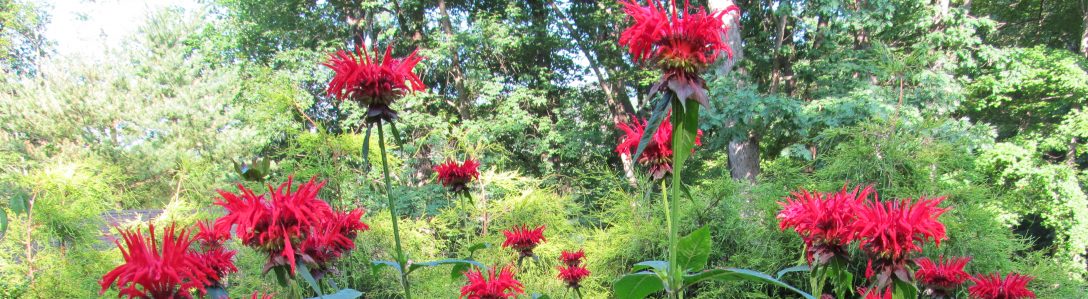
A wanderer in the backyard.

Amma’s house


Day 2: Happy to be home with my mother and my brother. Happy to water the plants again, happy to sweep the yard, and happy to sleep in my old room in my old bed.
The Ends of the Earth

India Day 1: Reached Delhi just past midnight, went through immigration, went and collected bag, rechecked it to Trivandrum, went through security, and reached my gate. The Trivandrum gate is Gate 58 out of the 62 gates in domestic departures. The ends of the earth. I am surprised at all the American eateries in the Indira Gandhi International airport. Krispy Kreme??? Good lord. I guess globalization means Americanization. It also appears to be a universal fact that all airports feature hostile design in their seating–they want to make sure that nobody sleeps or lies down. You have to sit upright. In Frankfurt, there were 3 or 4 seats that were sort of reclining; here I found a few gates had them. But overall, it is sit upright like a stick, buddy; we don’t want you to relax under any circumstances.
I am one of those people who can sleep on command. I normally fall asleep as soon as I board the plane if I want to do that. This time I watched two movies: Paul Thomas Anderson’s Inherent Vice, his adaptation of Thomas Pynchon’s wacky novel. The film is equally wacky; I had a big smile plastered on my face the entire time. Tight script, and fantastic performances by Joaquin Phoenix and Josh Brolin. It is this big bad world of awful men and all that, but Pynchon and Anderson and Phoenix and Brolin make it all so entertaining.
The second movie was Sister Midnight. It must be me, but I did not like it at all. I am all for the blue and black gloominess of Mumbai but I hit my threshold with Payal Kapadia’s All We Imagine as Light. I also disliked the soundtrack intensely; full of western roots and pop music and much of the movie felt like a music video for nostalgia pop. I was instantly distanced from the movie when it began with Radhika Apte as this petulant bride on a train with Howling Wolf’s “Moaning at Midnight” as the soundtrack of her state of mind or whatever. Howling Wolf? Good heavens. Similarly, with a wannabe Paris, Texas feel with “Dark was the night, Cold was the Ground” and Blind Willie Johnson. What is the exigency to use these great blues masters for this movie? I am unable to tell. So on it goes with T. Rex, Stooges etc–it all felt very self-indulgent on the director’s side. I didn’t like it at all. Radhika Apte’s character felt false to me, though Apte herself tried her best to make her believable. The movie has a single tone. It has single look. And it felt derivative. I was thoroughly underwhelmed.
India 2025-Day Zero

I came to Philly yesterday, a day early, to spend time with my daughter before flying out to India this evening. I made some chicken biryani for my daughter and her boyfriend; they said it was very good. We watched Brad Pitt in Bullet Train and then went to bed. Waking up in my daughter’s living room, it occurs to me that this is how life is transformed: children growing up and getting their own apartments, finding their partners, going to work, picking you up and taking you to their apartment, telling you, “here, mom, let me make your bed on the couch,” and “let me get you a towel if you want to shower.” I am happy and thankful. Happy also that she is a neat freak as I am. I am going to take them out for brunch later this morning and then they will drop me at the airport. I am flying Lufthansa this time.

From Tabloid Fodder to Industry Upheaval – The Hema Committee Report – FII
To Kill a Tiger – Review in FII
What Jennifer Did – Review in FII
Review of When the Bird Became a Wave . . . (Dir. M. R. Rajan, 2014)
When the Bird Became a Wave . . . A Journey with Kumar Shahani
Dir. M. R. Rajan. Cinematograph Kerala. 2014.
Reviewed by Gayatri Devi (2015)
In a deep and tenebrous unity
Vast as the dark of night and as the light of day
Perfumes, sounds, and colors correspond. (Charles Baudelaire, Correspondences)
In a wave or cloud, these leading lines show the run of the tide and of the wind, and the sort of change which the water or vapor is at any moment enduring in its form, as it meets shore, or counter-wave, or melting sunshine. Now remember, nothing distinguishes great men from inferior men more than their always, whether in life or in art, knowing the way things are going. Your dunce thinks they are standing still, and draws them all fixed; your wise man sees the change or changing in them, and draws them so,— the animal in its motion, the tree in its growth, the cloud in its course, the mountain in its wearing away. Try always, whenever you look at a form, to see the lines in it which have had power over its past fate and will have power over its futurity. Those are its awful lines; see that you seize on those, whatever else you miss. (John Ruskin, Elements of Drawing)
When children, unschooled in drawing, draw the archetypal landscape with sky, mountains, land and sea, it is not uncommon to see them use the sine wave as a symbol to represent both flying birds and flowing water. The energies of the sky and the sea–their invisible content–what makes it possible for things to live in them–are both represented by the wave form. Tribal art uses the sine wave as well to represent birds and waves. Indeed, the simplest wave form in which energy moves is the birdcall.
M. R. Rajan’s When the Bird Became a Wave opens with a resounding rendition of a hymn to the tribal god of rightful war, Murugan, supremely strong in his ascetic solitude in the guise of a beggar (we hear this song from a distance in G. Aravindan’s film Chidambaram as well). The song in real time captures Kumar Shahani’s gentle and rapt attention to its human art, but as the credits wind down over the song, Shahani, the subject of the film, walks out onto a misty green forest road somewhere in Kerala, and asks us to listen to a birdcall sounding from high up in a tree, invisible except for its sound, nature’s analog to the human song. Both the human song as well as the birdcall are part of nature. This opening confluence–hymn to Murugan, nature, and birdcall–charts the form and pattern of this beautiful film, much like the sine wave itself: a measured exposition into the world of archetypal–Kant would say allegorical–correspondences that speak of an underlying unity amongst forms — Baudelaire’s “deep and tenebrous unity,” where “perfumes, sounds and colors correspond.”
In another deeply engaging scene, Shahani speaks of the time he visited the great Surbahar/Sitar virtuoso musician Annapurna Devi, Ustad Allaudin Khan’s daughter, at her home. Annapurna Devi’s flat had a calling bell on which was taped a message: Do not ring the bell. Shahani waited outside Annapurna Devi’s flat until Devi came outside and let him in. Annapurna Devi was quite elderly then, and Shahani speaks of how the musician brought out her instrument and taught him how to play it with her hands, but with never once actually playing the instrument. Shahani says that he told Annapurna Devi that he would like to make a film of just her hands and feet. The anecdote is followed by another brief vignette of a visit to a metal smithy in Calicut, where Shahani and the film crew try out many different types of bells. Bells that do not ring; bells that ring; instruments that do not sound; hands that play and teach–these are the correspondences that only art can see and an artist can articulate. Rajan’s film reveals Shahani’s vision beautifully and accurately. It is an intentional way to look at nature, to look at life, to look at art, and the role of art in life and nature.
Once we become aware of this thread of correspondences, transformations, and patterns of mobility and growth, then we also become adept at identifying the dead weight, the nodes that do not grow, the directions that are just not there. The military-industrial complex, in Kumar Shahani’s words. I have described only two of the many beautiful anecdotes, vignettes or mini essays that make up this film. I must mention one more: towards the end of the film, Shahani speaks about the “invisible ideology” that permeates the lifeless consumerist culture that cannot create anything. This sequence is bookended by a truly marvelous bit of enigmatic reference to a poem by Kamala Das–we are not shown or told what this poem is; only that it is very beautiful and filled with little things about life–one must leave something for the imagination–and two beautiful portraits of a young Kamala and an older Kamala.
I absolutely loved this moment in the film; in many ways, it is only art that can birth this type of adjacency and nearness–a meaning that is entirely new. This sequence is once again followed by a walk along the beach where Shahani lovingly engages with children at play building sand forts and castles.While narrating the death of his dear friends, Shahani discusses yet another idea to create an artist’s center in Kerala. “Creative Play,” as with children playing on the beach is antithetical to death by commerce.
The full title of the film is When the Bird Became a Wave. . .: A Journey with Kumar Shahani. So how does one end a film where one is traveling with Kumar Shahani? When the Bird Became a Wave. . . squarely pins down our attention on yet another correspondence, this time between between film and the world. The film transitions from a shot of Shahani as he travels in a train from within the diegetic space of the film to Shahani’s reflection on the window of the speeding train merging with the “outside world.” It is a perceptual awareness that salutes both the film form and two filmmakers.
When the Bird Became a Wave . . . is a memorable tribute to a great director by a fellow filmmaker who has interpreted Shahani’s work and words with great sensitivity and high imagination and the gravity of an essay or an argument. Rajan’s film impressed me much like reading the potent aphorisms of Walter Benjamin. And befitting the ellipsis in the title after the word “wave,” the film ends with shots of running water, lot of water, high water flowing out to the right side of the edge of the screen, pushing past what has been and moving on to what will be, as Ruskin reminds us, since all waves contain within them the lines of mutable fate that sustain life.
*James Bunn’s Waveforms: A Natural History of Rhythmic Language (Stanford University Press, 2002) discusses the dominance of the sine wave as a symbolic analog of representation
Review of *Kaathal: The Core* – Suave Left Propaganda
Review of *Kaathal: The Core* (Director Jeo Baby, 2023, on Amazon Prime Video)
I have to start by stating that I found this film rather appalling as it amounted to crafting an appealing, well acted, well scripted, if melodramatic story, about what is essentially a film about outing a homosexual, a middle-aged gay man, without his consent or permission. Mine might be the minority report on the movie since mainstream reviews and social media posts applaud the film as a politically correct “love” story. They are all doing him a favor by outing him because they love him and they want him to live an authentic life and they love truth etc. We have nothing to fear except fear itself etc. I have to disagree. Outing a gay individual to their wider social context as a homosexual without their consent is not love, or proclaiming the truth. It is a form of coercion, and coercion is never about the individual being coerced. It is always about the ends of those engaged in coercion. In Kerala, it is possible to get a divorce on mutual incompatibility. There is no reason to out your spouse as a homosexual to get a divorce. I suspect the real reason this movie was made was as a propaganda film for the Left party in Kerala. This is a film made as a continuation of the women’s chain during the Sabarimala flap. The Left is the party of progressive values, for women, for the LGBTQ+ community etc. We will even out you before you are ready to come out of the closet yourself. This is the second act of “Ningalenne Communistaakki” for the LGBTQ community.
It is seductive story though and well acted. Mammootty plays the husband Devassy with the right amount of reticence. The father played by R. S. Panicker is also an excellent performance. So is Sudhi Kozhikode who acts as Devassy’s alleged lover, Thankan. I really liked his performance. The wife Omana played by Jyothika felt like the most underdeveloped, one-dimensional character to me.
But the film overall takes the easy way out to talk about LGBTQ rights in a state like Kerala, where young people are driven to suicide because of conversion therapies and other violence meted out to LGTBQ lives. If the film really wanted to address LGBTQ rights, then the story would have shown Devassy standing as a proud and out gay father and politician and running for the by-election from the core of his authentic, gay, being. Then see where that story takes you in Kerala.
Overall, an interesting film, but ultimately, a suave piece of Left propaganda.

 The Red Earth