*Tholkkunna Yudhathile Padayalikal.* Dir. M. R. Rajan, 2019. English subtitles.
M. R. Rajan’s new documentary film *Tholkkunna Yudhathile Padayalikal* (*Warriors of Losing Battle*) is an intimate and contemplative glimpse into the life and the persistent and pioneering ecological and socio-cultural activism of the Indian poet Sugathakumari. Rajan who has previously directed masterful documentaries about the Koodiyaattam exponent Ammannur Madhava Chakyar (*Pakarnnaattam*), the Kathakali performers Kizhppaadam Kumaran Nair (*Nottam*) and Kottakkal Sivaraman (*Minukku*), and film director Kumar Shahani (*When the Bird Became a Wave*), among others, has found the perfect subject for his reflective and meditative filmmaking in Sugatha teacher, as the poet was affectionately known in her home state of Kerala. Poetry whose natural home is the human voice and the ear might appear to be a challenge to translate properly to a visual medium like cinema. However, poetry belongs to the domain of images, and, in this sense, partakes in the language of cinema. *Warriors of Losing Battle,* produced by Kendra Sahitya Akademi, is an exquisite visualization of a poet’s soulful and shattering awakening to intervene on behalf of mother earth, poetry as a happening, an act and mode of resistance, an interruption and warning to the forces of greed and environmental destruction. Sugatha teacher likens her ecological awakening to that of a religious conversion.
The title of the film – *Warriors of Losing Battle* – is not an admission of defeat. Rather, for Sugatha teacher and her fellow activists, each battle fought to protect the environment, regardless of the outcome, was a brilliant opportunity to dream of a better world, to turn human imagination into a vision with weight, mass, density and dimensions, to reverse the course of destruction and turn it towards the direction of nurture and growth. Ultimately, the warriors of losing battle are the only ones left who will speak for the mountains, the river, and the trees. Rajan’s film celebrates these warriors who will not give up the fight though they know they might never win. You want to be in their company.
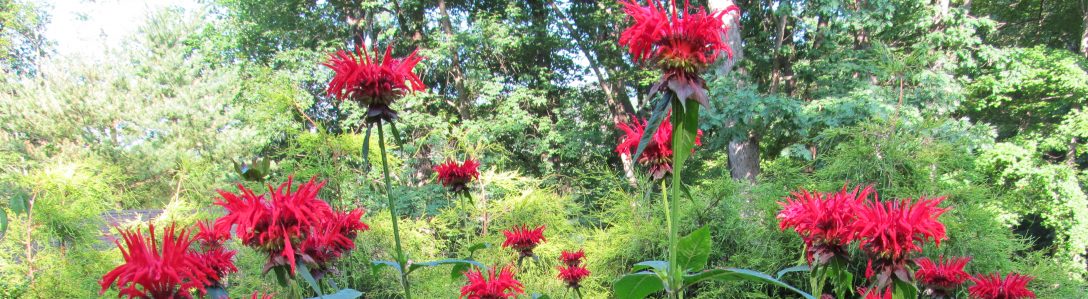
The film opens with an establishing shot, almost three whole minutes long, of flowers, buzzing butterflies and the faraway hills of the Silent Valley National Forest in north Kerala, the site of the first people-led environmental movement in the state in the mid 1970s. Sugatha teacher’s poem “Ini ee manassil kavithayilla” (“No more poetry in my mind”) read by teacher herself in a voice-over holds this static shot in place for the duration of the poem’s reading. It is a close-up almost at our eye level. We are almost inside the frame, in Silent Valley, smelling the misty air, the deep pink flowers brushing our face, the butterflies flying around our eyes, while we gaze at the apparition of peaks in the distance. The perfectly balanced foreground and background of this sustained static shot transport us and lock us into place immediately. We are in the land for which Sugatha teacher donned the warrior’s armor in the 1970s. The relationship between the image and the poem is both ominous and momentous: something greater than the homely joys and sorrows of teacher’s poetry up to that point will have to go. Something far, far greater and more life-defining is about to impact the poet.
The majority of this one-hour film utilizes the static camera with intimate close-ups that require us to maintain eye-contact with the images on the screen. We cannot afford to look away as we are invited to reflect deeply on what the film shows us: the gentle, overwhelming, and precarious beauty of an endangered ecosystem carelessly plundered, and bought and sold for human profit. When the camera moves, as in the shot of the watch tower at the heart of the Silent Valley, it is with an almost human leap and lurch to climb over it and drown it inside the verdant immensity of the great forest surrounding it. This is film-making of a very high degree of certitude, finish and finesse; philosophically firm, conceptually refined, and imagistically eloquent.
When we see Sugatha teacher for the first time, she is seated, this time facing the camera and us, inches away from our face, in a mid-close-up directly speaking to us. We see teacher’s face, her rather tired eyes, and her infinitely expressive hands as she recounts for us her earliest memories. Except for a quick cut to a photograph of her parents, Sri Bodheswaran and Smt. Karthyayini Amma, this is an almost four-minute-long static shot. Teacher’s anecdotes are engrossing. Anecdote one: teacher as a little girl with her mother braiding and decorating her hair with flowers. Anecdote two: two little girls, teacher and her equally illustrious elder sister Professor Hrdayakumari, building play houses for ladybugs with the cotton falling and floating from the trees in the yard. Teacher observes melancholically that she tried to save the creatures as they were sometimes swept away in a sudden downpour, but while you save four or five, five hundred die, she notes. I became the warrior of losing battles right then and there, teacher says. A little girl with flowers in her hair trying to save ladybugs from being swept away in the rain might as well be an enduring symbol for the ecological warrior in our times.
The film is structured as above with teacher speaking to the camera, primarily about
four of the many major events and causes that connect the arc of her advocacy and activist interventions: the Silent Valley environmental movement, the establishment of Abhaya homes for those suffering from mental health issues, Adivasi issues at Attappaadi, and homes for destitute girl children. There are clean cuts without any frenetic transitions. Several notable public intellectuals both in and out of the Shastra Sahithya Parishad, teachers, writers, poets, and artists appear in teacher’s memories of the early days of the *Save Silent Valley* movement in the 1970s when the forest faced imminent destruction for the building of a hydroelectric dam: N. V. Krishna Warrier, Ayyappa Panikker, O. N. V. Kurup, Vishnu Narayanan Namboothiri, Kadammanitta Ramakrishnan, R. V. G. Menon, Vaikom Mohammad Basheer, Sukumar Azhikode, S. K. Pottekaatt, O. V. Vijayan, John C. Jacob, Sharmaji, K. V. Surendranath et al. Several of teacher’s poems recited by teacher herself serve as transitions between different anecdotes. The film is precious just for the visualization of these poems. The poems rise over incomparable images of the forest, the trees, the river, the animals, the birds, and the insects with an ekphrastic clarity.
Sugatha teacher passed away in December 2020, and we come close to an awareness of her true significance in Kerala’s environmental precarity in the sequence with Maruthi and other Adivasi women and children in an Adivasi village. Teacher speaks with her characteristic indignation, dejection and resolve about the deforestation in the Attappaadi hills and her cautious determination to reverse the balding and browning of the hills by planting thousands of trees on just one hill, “to show the government that it can be done.” However, it is in Maruthi’s quiet and homely concern for teacher and her well-being that we come to understand how deeply human love and compassion guided teacher’s instincts to fight for what is right. While the Adivasi community sees and listens to teacher in camera over a laptop provided by the film crew, and we follow their comments about teacher’s timely intervention to stop the destruction of their habitat, and their genuine love for teacher, we feel a retroactive anxiety at the spectre of that lost battle. We feel the same anxiety in the scenes of teacher with the mentally ill and at the home for destitute girl children. We do not want this to be the losing battle. None of them deserve to die or to perish in abuse, poverty and destitution. Thus, the overall framework of the title becomes a cautionary tale.
Scripted by Anitha Thampi, *Warriors of Losing Battle* is photographed by K. G. Jayan and edited by Jais Thampi. The ecological theme controls the narrative of the film, and the framework of warriors who fight a losing battle brings a masterful coherence to teacher’s life and work as interpreted by the film. Kerala has witnessed some of the worst ecological disasters in the last few years validating every single concern expressed by Sugatha teacher in the film. Above all, *Warriors of Losing Battle* emphatically shows that the same faculty of imagination that spurs the poet stirs up the quest for truth and justice.
 The Red Earth